Go In Peace: Seven Asian War Destinations

04/24/09  Print This Post Print This Post    3 Comments   Popular   Written by Chris Tharp
  • Stumble It

Photo: Jayel Aheram

The 20th century was a time of brutal savagery in Asia. Warfare technology brought us Agent Orange, napalm, and the atomic bomb. And along with that, loss of human life on an enormous scale.

From the imperial Japanese conquest to the genocidal madness of the Khmer Rouge, the brutality was fierce and many were subject to its realities. The people of these countries haven’t forgotten their past ordeals and many sites have been erected to remind us of the horrors of war.

Here are seven humbling experiences in Asia:

Photo: breezyjay

1. The Cu Chi Tunnels

This rabbit warren of tunnels, located an hour outside Ho Chi Minh City, was a hotbed of guerrilla activity during the Vietnam War. Ex-Vietcong soldiers guide you around the site and through the underground passages.

Seeing the claustrophobic confines the Vietnamese endured for over 10 years gives you respect for their toughness and determination to win.

Tip: The tunnels are tight and dirty — dress appropriately. And don’t skip the anti-American propaganda film at the beginning.

2. Korean War POW Camp

During the Korean War, tens of thousands of North Korean and Chinese POWs were confined in this camp on Geoje Island, off the southern tip of the Korean peninsula. The entire area has been reconstructed, with life-sized dioramas depicting the soldiers working, rioting, and even doing their business in the latrines.

3. Tuol Sleng Prison and Killing Fields

Tuol Sleng Prison — code named S-21 — is where the Khmer Rouge interrogated and tortured nearly 17,000 victims during their murderous four-year reign. The prison was a high school, converted shortly after the Khmer Rouge took power. Photos of the thousands of victims can be viewed here, reminding us that these were real people.

Photo: leojmelsrub

The Killing Fields are located just outside Phnom Penh. It is here where the “enemies of the people” were executed. They were most often clubbed over the head in order to save bullets. Bullets are available to visitors, however, which you can shoot out of AK-47 rifles. Appropriate, or not? You decide.

4. The Massacre Museum

This museum/memorial in Nanjing, China, is dedicated to the victims of the rape of Nanjing. In 1937, Japanese troops occupied the city and went on a six-week spree of rape and murder, culminating in the death of some 300,000 unarmed Chinese.

They were so savage in their attacks that a Nazi official living in the city tried to intervene. He even wrote to Hitler to plead for German pressure. You know you’ve crossed the line when the Nazis are telling you to chill out.

5. The War Remnants Museum

Photo: imjoshdotcom

Formerly known as “The Museum of American War Crimes,” this one’s located in Ho Chi Minh City. It is dedicated to showing the world the depths to which the Americans and their allies went to keep the Vietnamese people down.

While sometimes overwrought with histrionic propaganda, the museum hits visitors in the gut with graphic images of the effects of Agent Orange and napalm, along with three jarred human fetuses deformed by exposure to dioxin. Not for the faint of heart.

Tip: Go well after lunch.

6. Panmunjeom and the DMZ

The Korean Demilitarized Zone (DMZ) bisects the whole of the Korean peninsula, acting as a buffer between the two countries. It’s four kilometers wide and, apart from being the most heavily armed border in the world, is very surreal. You know you’re visiting a place that could erupt in violence at any moment.

The Panmunjeom “truce village,” also known as the “Joint Security Area,” lies right in the middle of the DMZ. It’s home to a handful of buildings, where the two sides face off in this last Cold War outpost. You can walk into one of the meeting rooms which span the actual border.

The line of demarcation is drawn on the floor and even along the negotiation table. Stern-faced North Korean soldiers watch your every move, while sunglass-sporting Southern troops face down their Northern adversaries in rigid Tae Kwon Do stances.

Tip: Pay attention to the dress code and don’t point — it’s strictly prohibited.

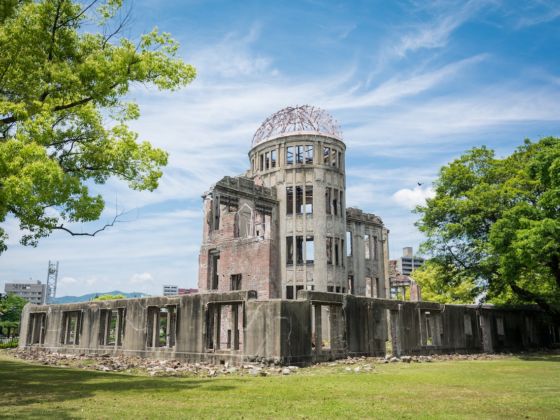
7. Hiroshima Peace Memorial Park

Photo: troshy

It’s impossible to walk away from here without a sense of humility and sadness. The surroundings are so peaceful and beautiful it’s hard to imagine Hiroshima was the site of the world’s first atomic attack on 6 August 1945.

Most haunting is the A-bomb Dome, which is the skeletal remains of the Industrial Promotion Hall, the building closest to the bomb’s hypocenter that remained standing. It’s a concrete reminder of the victims of the bombing.

COMMUNITY CONNECTION

Does “dark tourism” — visiting sites related to death and suffering — turn these places into mere spectacles? You may find your answer in this article.

And what if you do visit an old war site — is it OK to document what you see? Ian MacKenzie discusses it here.


  • Stumble It

About the Author

Matador ID: tharp42

Chris Tharp lives in Busan, South Korea, where he teaches English at a college. His award-winning writing has appeared on various travel sites around the web. He hates mayonnaise and any of its sister sauces.

3 Comments... join the discussion!

  • Bobby McGill replied on April 26, 2009

    This is interesting stuff. I really enjoyed the succinct descriptions by the writer. I have been to all the spots except in Nanjing, but plan to go there this summer.

    (Report comment)

    ↵ Reply
  • tharp42 replied on April 26, 2009

    Cheers, Bobby.

    I’m not sure how I feel about the linking of this article into the genre of “dark tourism.” Of course, much of the subject matter is “dark.” But so is history. To recommend sites that illuminate the history of a place – no matter how tragic – is this “dark?” We must be aware of the background of where we are. And as much as I admittedly enjoy the carefree backpacker life (I do), history lives wherever we go. It’s part of the tapestry, so I think it should be understood and acknowledged.

    (Report comment)

    ↵ Reply
  • bravo replied on April 27, 2009

    Nice work — very well put together

    Every time I go to Phnom Penh I plan to visit Tuol Sleng Prison and the Killing Fields, but I can never bring myself to go there. It’s bad enough it happened, especially since it happened right after we pulled out and we didn’t do anything to stop it.

    That said, there should be a memorial/museum and people should be taught that it happened.

    On a lighter note, I finally read your Worst Motorcycle in Laos story in its entirety.

    2 years ago before I went to Laos, I was doing research on the net and stumbed onto your story. I think Road Junky had it. Anywho, I must have never finished it, cuz I would’ve remembered it. Damn. What an ordeal!

    But your ending was spot on. I find that when shit goes wrong while travelling, the end result is surprisingly cool. And it gives you a good story to share.

    (Report comment)

    ↵ Reply

Leave a Comment

Jump To Category:


Explore the Community


Latest Community Blogs


Popular Stories on Matador

12 Personal Travel Websites That Will Make You Quit Your Day Job

... 

10 Traveler's Tips For Rocking A Nudist Beach

Travelers tend to enjoy ultimate freedom on the road, t... 

10 Volunteer Opportunities For Free Travel

From assisting with disaster relief to helping on the A... 

The 50 Greatest Campfire Songs Of All Time

... 

The A-B-C-D-E of Travel Photography

Action, Balance, Composition, Depth of Field, Evocation... 

10 Things to do in Amsterdam BESIDES Smoking Pot

There's more to Amsterdam than legal bud.... 


Focus


Editor Blogs